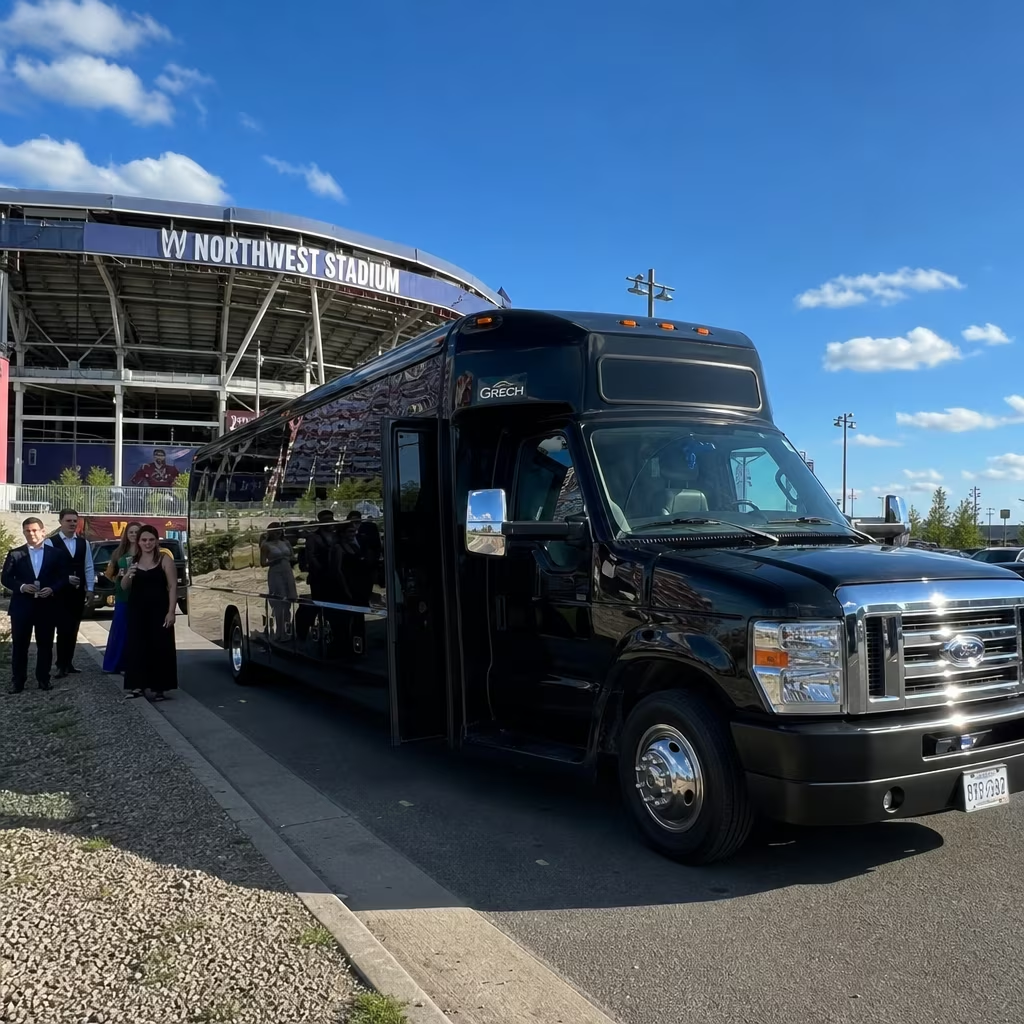
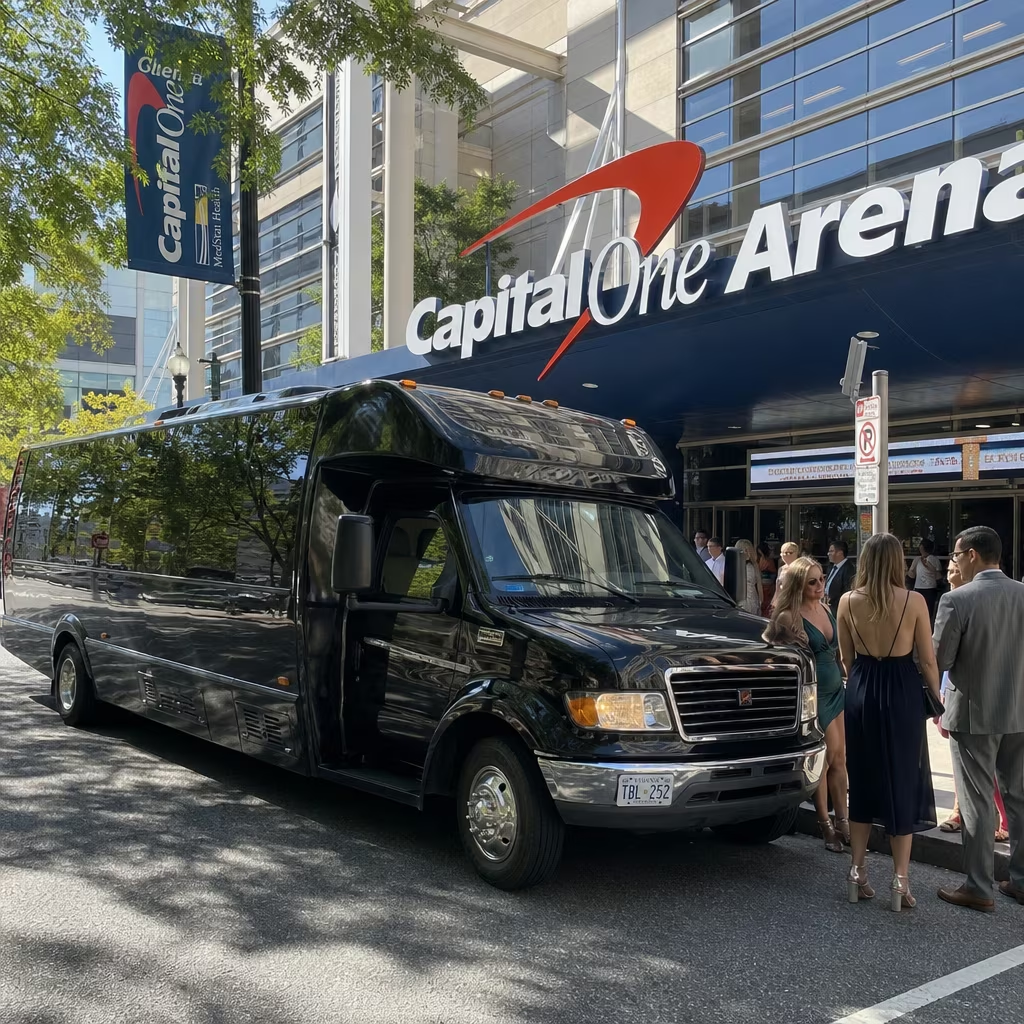
Every spring, somewhere between 1.5 and 2 million people descend on Washington, D.C. for the National Cherry Blossom Festival — and nearly every one of them discovers the same painful truth on arrival: parking near the Tidal Basin is essentially a fantasy, the roads around the National Mall lock up hours before the big events, and rideshare surges hit their seasonal peak right when your group is ready to head home. If you are organizing a group trip to the festival — a school, a church, a family reunion, a corporate outing, a birthday party making the most of peak bloom — the single question worth answering before anything else is: how does the bus actually get everyone there, and where does it drop off?
This guide answers that plainly, using the festival's own published schedule, the Metropolitan Police Department's 2026 traffic advisories, and the NPS and WMATA's own guidance for visitors. It covers every major 2026 event with its specific road closures, where your bus can drop the group and where it parks while you are inside, how to sequence a multi-stop festival day, and what the ride costs. For the full picture of how we handle group trips across the District, see our Washington DC group transportation services.
Festival dates 2026
March 20 – April 12, 2026
Peak bloom 2026
March 29 – April 1 (NPS projection)
Tidal Basin parking
Closed to parking on peak weekends
Bus parking (Union Station)
$75/day peak season; reserve in advance
Closest Metro to Tidal Basin
Smithsonian (~10 min walk), or L'Enfant Plaza
Group sizes we handle
~15 to 56 passengers in one vehicle
Why the Cherry Blossom Festival Is a Transportation Problem First
Peak bloom lasts roughly four to seven days — and it can shift by two weeks depending on the winter — which means the entire region tries to show up on the same two or three optimal weekends. The National Cherry Blossom Festival runs from March 20 through April 12 in 2026, with marquee events every weekend, but the Tidal Basin crowds are worst when the trees hit their peak. The National Park Service projected peak bloom between March 29 and April 1 for 2026, which falls directly between the Blossom Kite Festival (March 28) and Petalpalooza (April 4) — meaning the single most crowded window of the year lines up almost exactly with the two biggest events on the calendar.
The NPS itself closed the Tidal Basin parking lot to parking on peak weekends in 2026. East Basin Drive between the Jefferson Memorial and the George Mason Memorial was also closed, moving the Welcome Area (now called Bloomfest) entirely behind the Jefferson Memorial. That is not a minor inconvenience — it is the real reason every bus, car, and rideshare that tries to "just drive over" ends up stuck on Independence Avenue SW or Ohio Drive SW, sometimes for over an hour.
A Washington DC charter bus rental changes the equation entirely: one coordinated drop, no parking scramble, and your group walks to the blossoms instead of sitting in traffic wishing they had planned differently. Call 202-602-1664 to lock in your date before the best vehicles go.
The 2026 Festival Calendar — and What Each Event Means for Your Bus
The 2026 National Cherry Blossom Festival runs for 24 days across four weekends, with over 200 cultural, artistic, and community events. Here are the five events that draw the biggest crowds and create the most serious transportation friction — with the specific road closures your group needs to know.
Opening Ceremony — Saturday, March 21
The festival's official kickoff takes place at DAR Constitution Hall (1776 D St NW, Washington, DC 20006), 5–6:30 p.m., with cultural performances celebrating the original 1912 gift of cherry trees from Japan. The venue sits two blocks from the White House on the west side of the Ellipse — straightforward by bus, with drop-off on 18th Street NW or D Street NW. This is the lowest-friction event of the festival calendar since the full road closure apparatus hasn't kicked in yet.
It's also a smart night to arrive: cherry trees around the Tidal Basin are just opening, crowds are manageable, and a party bus from Virginia or Maryland that swings by the Jefferson Memorial on the way home gives the group a first look at early bloom without peak-weekend gridlock.
Blossom Kite Festival — Saturday, March 28
The Blossom Kite Festival runs 10 a.m.–4 p.m. on the Washington Monument grounds — free, family-friendly, and one of the most-attended single days of the entire festival. It is also the event with some of the heaviest road closures of the month.
Per the Metropolitan Police Department's 2026 traffic advisory, the following streets closed from 6 a.m. to 8 p.m. on March 28:
- 17th Street NW between Constitution Ave NW and Independence Ave SW
- 15th Street NW between Constitution Ave NW and Independence Ave SW
- Independence Ave SW between 14th St SW and 17th St SW
- Madison Drive NW between 14th St NW and 15th St NW
- Jefferson Drive SW between 14th St NW and 15th St NW
- Raoul Wallenberg Pl SW between Independence Ave SW and Maine Ave SW
That means the entire western approach to the Washington Monument grounds — the routes that every GPS defaults to — is shut down for 14 hours. Your bus cannot use 15th or 17th Street as an approach corridor. The practical drop-off solution for Kite Festival day: Constitution Ave NW on the north side, approaching from 7th or 9th Street, where the closed area is smaller.
Your group walks south from Constitution Ave onto the monument grounds. Bus parking on event day should be pre-arranged at Union Station ($75/day in peak season, reservation required) or Buzzard Point ($20 per 3 hours, $50/day). Both require the bus to leave the drop zone and park elsewhere rather than waiting curbside — standard practice for a full-day National Mall event.
We highly recommend reviewing the official MPDC traffic advisory page in advance to confirm the current road closures for your event date.
The one fact that catches Kite Festival groups off guard: the 15th and 17th Street closures start at 6 a.m. — hours before most groups are thinking about traffic. If your bus tries to approach via the standard westbound route on Independence Avenue SW, it hits the closure and has to reroute cold. Know the approach corridor before departure day.
Petalpalooza — Saturday, April 4
Petalpalooza runs 1–9 p.m. at the Capitol Riverfront / Navy Yard — live music, a beer garden, art installations, roaming performers, and the official National Cherry Blossom Festival Fireworks show over the Anacostia River at 8:30 p.m. It is free and open to all ages. The venue is well away from the Tidal Basin, which makes it the easiest major event to reach by bus — but the Metropolitan Police Department issued a separate road closure advisory for Petalpalooza, with Emergency No Parking and street closures in effect from 9 a.m. to 10 p.m. on April 4.
The affected streets centered on the Navy Yard included 3rd, 4th, 5th, and Water Street SE. The Navy Yard–Ballpark Metro station is directly adjacent to the venue, making this the one major festival event where Metro does most of the work — but for a group of 20 or 30 people arriving together from Northern Virginia, Maryland, or the Virginia suburbs, a single bus drop on M Street SE just east of the closed zone puts everyone at the venue entrance without the Metro squeeze. The post-fireworks pickup is the critical plan: rideshare surges dramatically at 9 p.m. when 8,000 people leave at once.
Set your pickup window with our team in advance so the bus is already there and waiting when the group walks out. We review the official MPDC Petalpalooza traffic advisory for each event year to confirm current drop-off and staging zones.
Cherry Blossom 10-Miler — Sunday, April 12
The Credit Union Cherry Blossom Ten Mile Run is one of the largest road races in the country — and on April 12, 2026, it creates some of the most sweeping road closures of the entire festival calendar. The course runs from the Washington Monument grounds through East Potomac Park, around Hains Point, across Arlington Memorial Bridge, and back along Rock Creek Parkway and Pennsylvania Avenue. Per the MPDC's 2026 traffic advisory, closures ran from approximately 6 a.m. to 12 p.m. and included:
- Ohio Drive SW from 23rd Street to East Basin Drive
- Independence Avenue SW from 14th Street to 23rd Street
- Rock Creek Parkway from Ohio Drive to Virginia Avenue NW
- East and West Potomac Parks entirely
- Maine Avenue SW, Theodore Roosevelt Bridge ramps, Virginia Avenue, and portions of I Street NW
The race course runs directly through the Tidal Basin corridor — which means if your group wants to see the cherry blossoms on race day, the entire approach via Ohio Drive SW and Independence Ave SW is closed until noon. A bus arriving before 6 a.m. can drop the group on Independence Avenue west of 14th Street before closures take effect; arrivals after 6 a.m. should approach from the north (Constitution Avenue) and plan for a longer walk. April 12 is also the final day of the festival, which may push cherry blossom interest toward earlier weekend dates — but for groups who want to combine race spectating with Tidal Basin viewing, this is the most complex day of the calendar to navigate by ground transportation.
National Cherry Blossom Festival Parade — Saturday, April 11
The parade runs 11 a.m.–1:30 p.m. along Constitution Avenue NW, stretching 10 blocks from 7th Street to Virginia Avenue near the Washington Monument. The MPDC's 2026 advisory placed Emergency No Parking from 3 a.m. to 5 p.m. on the following streets: 7th Street from Pennsylvania Ave to Independence Ave, 10th Street from Pennsylvania Ave to Constitution Ave, and 12th Street from Pennsylvania Ave to Constitution Ave (southbound lanes). Additional vehicle closures from approximately 9 a.m. to 5 p.m. covered 9th, 12th, 14th, 15th, and 17th Streets between Independence Ave and Pennsylvania Ave.
The parade route essentially cuts the National Mall in half from north to south — which is the detail most visitors don't realize until they are on the wrong side of Constitution Avenue at 11 a.m. wondering how to reach the cherry trees. A Washington DC party bus or charter bus rental that drops your group east of 7th Street NW on Pennsylvania Avenue puts everyone at the parade start with easy access; dropping west of the closure on E Street or 23rd Street puts everyone near the monument end. Either way, the bus needs a confirmed parking plan before the closure takes full effect Saturday morning.
Call 202-602-1664 when you're ready to map the approach for your specific pickup date.
Where Your Bus Drops Off at the Tidal Basin
The Tidal Basin is not a single address — it is a 107-acre reservoir flanked by the Jefferson Memorial, the FDR Memorial, the Martin Luther King Jr. Memorial, and the lined footpath where the cherry trees are most dense. There is no single "front door." Here is how bus drop-off actually works at the main viewing zones.
Ohio Drive SW — Main Tidal Basin Approach
The primary road that runs along the western edge of the Tidal Basin is Ohio Drive SW, which borders West Potomac Park and follows the shoreline past the Jefferson Memorial toward Hains Point. On non-event, non-peak weekends, a bus can drop the group along Ohio Drive SW near the West Basin Drive intersection, putting passengers a short walk from the cherry tree footpath along the western basin edge. This is as close as a large vehicle gets to the Tidal Basin viewing path.
There is metered motorcoach parking on Ohio Drive at $6/hour with a 3-hour cap — not useful for a full festival day, but sufficient for a 2-hour drive-through visit with a quick drop and return pickup. Once the 3-hour cap is hit, the meter cannot be extended.
On peak bloom weekends and during the 10-Miler (April 12), Ohio Drive closes entirely. On those days, the approach shifts north: Independence Avenue SW between 14th and 17th Streets offers bus drop-off access to the north entrance of the Tidal Basin footpath, with the Jefferson Memorial about a 10-minute walk south. Your group arrives at the same cherry trees from the other direction.
Independence Avenue SW — North Side Access
For the Washington Monument-area events (Kite Festival, Parade), the most reliable bus drop zone is the western end of Constitution Avenue NW near the Lincoln Memorial — an approach the National Park Service itself cites for charter bus access to the Mall. Your group enters the monument grounds from the north and can walk south past the Washington Monument toward the Tidal Basin in about 15 minutes, or southeast to the Mall museums in 5. This approach stays open on most closure days because the east-west closures (15th, 17th Streets) do not block Constitution Avenue itself from the east.
Your bus loops back to Union Station or Buzzard Point to park while the group is on the grounds.
Bus Parking Options While Your Group Is at the Festival
Once the group is dropped, the bus needs somewhere to go for the duration. The two best options for a full-day festival visit:
- Union Station Bus Terminal (50 Massachusetts Ave NE): 32 motorcoach spaces, reservation-required in peak season. Peak season (March–June) rates run approximately $75/day. Only reservations guarantee a space. Plan around a 15–20 minute drive from the Tidal Basin drop zone to Union Station. Confirm current rates and availability at the Union Station parking page.
- Buzzard Point (southern tip of Southwest DC): Motorcoach parking at approximately $20 per 3 hours or $50/day with in-and-out privileges. Backup option when Union Station is full, slightly farther from the key pickup zones but workable.
For short drop-and-return visits (kite flying, parade watching, or a 90-minute Tidal Basin walk), metered motorcoach parking on Ohio Drive SW ($6/hour, 3-hour max) or on Independence Avenue works fine — budget the meter time carefully so the bus isn't ticketed. We work out the parking plan for your specific event and date when you book, so there's no discovering your options at the gate.
The Full 2026 Festival: Events, Locations, and Bus Logistics
| Event | Date & Time | Location | Key bus logistics |
|---|---|---|---|
| Opening Ceremony | March 21, 5–6:30 p.m. | DAR Constitution Hall, 1776 D St NW | Drop on 18th St NW or D St NW; no major closures yet |
| Blossom Kite Festival | March 28, 10 a.m.–4 p.m. | Washington Monument grounds | 15th & 17th St closed 6 a.m.–8 p.m.; drop via Constitution Ave NW from east |
| Petalpalooza | April 4, 1–9 p.m. | Capitol Riverfront / Navy Yard | Drop on M St SE east of closure; fireworks pickup at 9 p.m. — stage bus in advance |
| Cherry Blossom 10-Miler | April 12, 6 a.m.–noon | Washington Monument to Hains Point | Ohio Drive & West Potomac Park closed; approach from Constitution Ave NW |
| Festival Parade | April 11, 11 a.m.–1:30 p.m. | Constitution Ave NW, 7th–Virginia Ave | Drop east of 7th St (parade start) or west near Lincoln Memorial; major N–S closures |
Bus vs. Metro vs. Driving: The Honest Comparison for a Festival Group
WMATA runs enhanced cherry blossom season service every year. In 2026, Metro added extra trains system-wide, cancelled scheduled track work from March 20 through April 18, and increased staff at key stations. The WMATA cherry blossom travel guide recommends Smithsonian station (Blue/Orange/Silver Line) as the closest to the Tidal Basin at about a 10-minute walk, and suggests L'Enfant Plaza, Archives, or Federal Triangle as overflow options to avoid platform crowding.
Metro is an excellent option for a group of two, four, or six people. For a group of 20 or 30, it creates a different set of problems.
| Option | Best for | Arrive together? | Schedule flexibility? | Crowding risk |
|---|---|---|---|---|
| Charter bus or party bus rental | Groups of 15–56 | Yes — one vehicle, one arrival | High — your itinerary, your timing | None — private vehicle |
| Metro (WMATA) | 1–8 people | Only if same train, same car | Low — train schedule, station crowding | High on peak bloom weekends |
| Rideshare (Uber/Lyft) | 1–4 per car | No — multiple cars, multiple ETAs | Moderate, but surge-priced at event end | Surge pricing at exit time |
| Driving / parking yourself | 1–2 cars, off-peak only | No — caravan splits | Low on peak weekends | Tidal Basin lot closed on peak days |
The honest read: Metro works beautifully for small groups who don't mind being separated on the platform and packed into a train car with hundreds of other festival visitors. But a school group of 35, a family reunion of 22, or a corporate team trying to arrive together on a schedule doesn't fit that model. One Washington DC charter bus keeps everyone in the same vehicle, drops the group at the approach closest to your event, and cuts out the 8 p.m. rideshare surge after Petalpalooza fireworks entirely.
The bus is the designated-driver solution and the travel coordinator solution and the luggage-holder solution all in one — and once the cost is split across 25 or 30 people, it is usually competitive with Metro fare plus the coordination overhead.
Which Vehicle Fits Your Group?
Not every cherry blossom group is the same size — or the same kind of outing. Here is how the fleet breaks down for a festival trip.
| Vehicle | Typical capacity | Luggage & storage | Best for | Key amenities |
|---|---|---|---|---|
| 14-passenger Sprinter limo | Up to 14 | Modest — small bags, camera gear | Private family groups, VIP photography outings | Premium leather, USB charging, tinted privacy windows |
| 15–35 passenger minibus | ~15–35 | Overhead plus some underfloor | Church groups, school classes, mid-size family reunions | Powerful A/C, plush reclining seats |
| Party bus (15–50 passengers) | ~15–50 | Onboard, lighter | Birthday groups, bachelorette parties, corporate celebration outings | Built-in bar, LED lighting, Bluetooth sound, flat-panel TVs |
| 40–56 passenger charter bus | Up to 56 | Excellent — undercarriage bays | Full school grades, large reunions, multi-stop festival days | Reclining seats, climate control, overhead storage, WiFi, power outlets, onboard restroom, undercarriage bays |
For a multi-stop festival day — Opening Ceremony followed by Tidal Basin viewing followed by dinner in Georgetown — a full-size charter bus keeps the whole itinerary under one roof and the luggage bays hold whatever the group needs for a long day out. For a birthday group of 20 heading to peak bloom and Petalpalooza, a party bus with LED lighting and a sound system turns the whole day into part of the celebration, not just the transport between stops. ADA-accessible vehicles are always available — just let us know ahead of your departure date and we will match the right vehicle to your group's needs.
Building a Full Cherry Blossom Festival Day Itinerary
The festival runs across Washington, Adams Morgan, the Navy Yard, Georgetown, and beyond — and a bus is uniquely suited to covering multiple neighborhoods without everyone having to renegotiate transportation at every stop. Here is a sample one-day arc for a group of 30 coming from the Northern Virginia suburbs for peak bloom weekend (targeting the March 29–April 1 window when the trees are fullest).
- 8:30 a.m. departure from your pickup point in Arlington, Tysons, or Alexandria — early enough to arrive before the crowds swell and before Ohio Drive SW fills with foot traffic.
- 9:15 a.m. — Bus drops the group on Ohio Drive SW near West Basin Drive. The cherry trees along the western Tidal Basin footpath are at their most photogenic in the morning light. The Jefferson Memorial is a five-minute walk south.
- 11:00 a.m. — Bus moves to Buzzard Point or Union Station. Group walks the full Tidal Basin loop (~1.8 miles), past the FDR Memorial, the MLK Memorial, and back to the Jefferson Memorial south entrance.
- 12:30 p.m. — Bus returns to the Independence Ave / Ohio Drive staging area for pickup and drives the group to the National Mall for a look at the National Monument and a museum stop (Air & Space, Natural History, or American History, all free, all on the Mall).
- 3:00 p.m. — Georgetown lunch or dinner at M Street NW — bus drop on M Street or K Street near the waterfront. Georgetown has no Metro stop, which is the reason most groups skip it; a bus makes it a trivial add.
- 5:30 p.m. — Return to Virginia suburbs. Home before the evening traffic surge.
That itinerary covers the Tidal Basin, the National Mall, the Jefferson Memorial, and Georgetown in a single day — all without anyone navigating Metro transfers, paying for parking at four different stops, or figuring out how to get from Georgetown to the Mall without a car. The bus is what ties a multi-stop festival day together and actually makes it work. Call 202-602-1664 to build a custom route for your group's specific priorities and pickup points.
What It Costs to Rent a Bus for the Cherry Blossom Festival
Party Bus In Washington provides all-inclusive pricing online in under 30 seconds — you will know the exact number before you ever book. The quote is shaped by a few clear factors: vehicle size, total hours, date and pickup location, and mileage. Here are real ranges to anchor your estimate:
- 14-passenger Sprinter limos: $170–$344/hour
- 15–20 passenger party buses: $204–$378/hour
- 20–30 passenger party buses: $244–$414/hour
- 35–50 passenger party buses and minibuses: $294–$490/hour
- 40–56 passenger charter buses: $150–$300/hour or $1,200–$2,500/day
The per-person math is where a bus usually wins the argument. A 40-passenger charter bus for a 6-hour festival day at $175/hour runs $1,050 total — about $26 per person, before you factor in that each Metro rider pays a round-trip fare and still has to navigate the Smithsonian station crowd at 3 p.m. on peak bloom Sunday. Pricing depends on mileage, time of year, and vehicle type, but you will never be surprised by hidden costs.
Bus parking at Union Station ($75 in peak season) is a separate line item, not bundled into the charter rate — and it is the same cost whether you have one bus or one car, which is another reason the per-head math on a full bus is so compelling.
Book early for cherry blossom season. Peak bloom in late March and early April is D.C.'s single highest-demand window for group transportation. The vehicles that seat 40 or 50 go first.
For a March 28 Kite Festival trip or a March 29–April 1 peak bloom weekend, booking two to three months out is not excessive — it is the difference between having your first-choice vehicle and settling for a smaller option at a higher hourly rate. Call 202-602-1664 or use the online quote tool to check availability for your date today.
Getting There: Drive Times and Routes from Virginia and Maryland
The Tidal Basin is essentially the geographic center of the DMV — which means most party bus and charter bus groups are coming from the surrounding suburbs. Here are typical drive times to the Independence Ave SW / Ohio Drive SW drop zone on a non-event morning (festival event days add 30–60 minutes to every estimate in the table below due to road closures and increased local traffic).
| From… | Approx. distance | Typical drive time (off-peak) |
|---|---|---|
| Arlington, VA | ~4 miles | 10–20 minutes |
| Tysons Corner, VA | ~13 miles | 25–40 minutes |
| Alexandria, VA | ~7 miles | 15–25 minutes |
| Bethesda, MD | ~8 miles | 20–35 minutes |
| Silver Spring, MD | ~9 miles | 25–40 minutes |
| Rockville, MD | ~15 miles | 30–50 minutes |
| Baltimore, MD | ~40 miles | 55–75 minutes |
Festival event days add real time to every estimate above — the Kite Festival (March 28) and Parade (April 11) generate the worst traffic of the entire spring calendar, with Independence Avenue and Constitution Avenue backing up for blocks before the first float rolls. Arriving before 9 a.m. on those days changes the experience entirely. A bus from Baltimore leaving at 7 a.m. rolls into the drop zone at 8:15 a.m. before the road closures are fully in place; the same group leaving at 10 a.m. may not reach the drop zone until noon.
Build the early departure into the itinerary, and the festival day becomes the smooth outing it's supposed to be.
Coming From Out of Town: Airport Pickups and Hotel Shuttles
For groups flying into the Washington area for the festival, the bus handles the airport leg cleanly. The two main airports serving D.C.:
Ronald Reagan Washington National Airport (DCA) — about 5 miles south of the Tidal Basin, a 15–20 minute drive via the George Washington Parkway and across Memorial Bridge on a quiet morning. Charter buses pick up from outside National Hall on the upper level at DCA, per the airport's official ground transportation guidance. One bus collecting the whole group at baggage claim and running directly to a Georgetown hotel or a National Mall hotel keeps out-of-town guests from splitting into rideshares on arrival day.
For groups whose festival visit is part of a longer D.C. weekend, a hotel in Foggy Bottom, Georgetown, or Southwest DC puts the Tidal Basin within walking distance — the bus handles the airport-to-hotel leg and the festival excursion legs as part of a single itinerary.
Washington Dulles International Airport (IAD) — about 27 miles west via the Dulles Toll Road, roughly 45–60 minutes without traffic. Dulles groups benefit most from the charter bus because the drive in is longer and there's no Metro option directly from the terminal to the National Mall. A single bus collects the group at curbside arrivals and runs straight to the hotel or to the festival — no Silver Line to Metro Center, no transfer, no luggage drag through a crowded station.
Trip Types We Take to the Cherry Blossom Festival
Different groups, same goal: arrive together at the best trees in the country when they are actually blooming. A few of the cherry blossom runs we set up most often:
- School field trips. One coordinator, one headcount, one bus — dramatically simpler than parent-car caravans through road closures on Independence Avenue. A 40–56 passenger charter bus handles a full class or a full grade, with undercarriage storage for lunches, bags, and camera equipment. The onboard restroom cuts out the "can we find a bathroom near the Tidal Basin" problem that every field trip organizer dreads.
- Family reunions. Grandparents to grandkids in a single climate-controlled cabin, with no one stuck navigating the Metro escalators at Smithsonian station carrying a stroller and a diaper bag. The bus parks at Union Station while the family walks the Tidal Basin loop, then picks everyone up at the Jefferson Memorial south entrance.
- Corporate and team outings. A spring festival day is a natural team-building event — and a party bus with its LED lighting and sound system turns the drive over into part of the experience. Employees from Tysons or Bethesda campuses board in one spot; everyone arrives at the Tidal Basin together instead of trickling in from five different Metro lines.
- Birthday and celebration groups. Peak bloom coincides with spring birthdays, and a Tidal Basin outing on a 50-passenger party bus with a custom playlist and a built-in bar is a considerably better celebration than splitting the birthday party into three rideshares and hoping everyone finds each other near the Jefferson Memorial.
- Wedding parties and engagement photos. The cherry trees around the Tidal Basin and in East Potomac Park are one of the most sought-after backdrops in the region for spring photography. A Sprinter limo or minibus moves the bridal party and photography crew as one coordinated group, dropping at the best morning light angles before the crowds arrive.
Booking, Timing, and What to Know Before You Go
Booking a Washington DC bus rental for the Cherry Blossom Festival comes down to three steps:
- Request a quote with your group size, event date, pickup location, and any stops you want to add to the itinerary.
- Confirm the vehicle and the approach route. We check the current road closure plan for your specific event date — the closed streets shift between the Kite Festival, the Parade, Petalpalooza, and the 10-Miler — and lock in the right drop zone and parking plan.
- Set your pickup window. The post-event pickup arrangement is the most important logistics step for the major evening events. Tell us your expected wrap time for Petalpalooza fireworks, and the bus is there and ready when the group walks out — no competing for rideshares with everyone else leaving at 9 p.m.
A few timing considerations worth knowing upfront:
- Peak bloom can shift by two to three weeks. The NPS projected March 29–April 1 for 2026, but in warmer or cooler years bloom has landed as early as March 17 or as late as April 14. Book your bus around your target event dates rather than trying to predict peak bloom precisely — the festival events are fixed on the calendar even when the trees are not.
- Book by January for peak weekends. The March 28 Kite Festival and the March 29–April 1 peak bloom window are Washington's highest-demand transportation dates of the spring. Vehicles for 30–50 passengers are often committed 8–10 weeks in advance. Waiting until two weeks before the event means choosing from what's left.
- Event closures are confirmed year to year. The MPDC posts official traffic advisories 7–10 days before each major event. We track those and update your approach plan accordingly — you should not have to check MPDC every week to know if your drop zone is still open.
Frequently Asked Questions
Where does a charter bus drop off for the Tidal Basin cherry blossoms?
On most non-event weekends, the closest approach is along Ohio Drive SW near West Basin Drive — a short walk from the Tidal Basin footpath and the Jefferson Memorial. During major festival events (Kite Festival, 10-Miler), Ohio Drive SW and portions of Independence Ave SW close, and the approach shifts to the north side via Constitution Avenue NW. We confirm the current drop zone for your specific event date when you book, so there is no discovering a closed road on arrival day.
Is Tidal Basin parking open during cherry blossom season?
No — the National Park Service closed the Tidal Basin parking lot to parking on peak bloom weekends in 2026, and East Basin Drive between the Jefferson Memorial and George Mason Memorial was also closed. Even in years when the lot technically opens, it fills within the first hour of daylight on peak bloom days. A charter bus that drops your group and moves to Union Station or Buzzard Point to park is the practical alternative to a parking situation that doesn't reliably exist.
What Metro station is closest to the Tidal Basin?
Smithsonian station (Blue/Orange/Silver Line) is approximately a 10-minute walk from the Tidal Basin footpath's north entrance. L'Enfant Plaza and Federal Triangle are nearby alternatives recommended by WMATA when Smithsonian platforms are overcrowded, which they often are on peak bloom weekends. For a group of 20 or 30, a bus drop on Ohio Drive SW or Independence Ave SW puts the group closer to the trees than any Metro station does.
How much does it cost to rent a bus to the National Cherry Blossom Festival?
Pricing depends on vehicle size, total hours, date, and your pickup location. A full day with a 40–56 passenger charter bus typically runs $150–$300/hour; a minibus or smaller party bus runs $204–$490/hour depending on size. Split across 30 or 40 people, the per-head cost is usually competitive with Metro fare plus coordination overhead. Party Bus In Washington provides all-inclusive quotes in under 30 seconds — call 202-602-1664 or use the online tool for your specific date.
What roads close for the Blossom Kite Festival?
On March 28, 2026, 15th Street NW and 17th Street NW between Constitution Ave NW and Independence Ave SW closed from 6 a.m. to 8 p.m., along with portions of Independence Ave SW between 14th and 17th Streets, Madison Drive NW, Jefferson Drive SW, and Raoul Wallenberg Pl SW. The bus approach on Kite Festival day should come from the east along Constitution Ave NW rather than the standard 15th or 17th Street corridors. Review the current MPDC advisory before your trip to confirm closures for the current year.
When is peak cherry blossom bloom in Washington DC?
The National Park Service projected peak bloom for March 29–April 1 in 2026. Peak bloom typically lasts four to seven days before petals begin to fall, and the date shifts year to year based on winter temperatures — ranging from mid-March in warm years to early April in cooler ones. The NPS bloom watch page publishes the official annual prediction; the festival runs fixed dates regardless of when peak bloom lands.
How far in advance should I book a bus for the cherry blossom festival?
For peak bloom weekends (late March–early April) and the Kite Festival or Parade dates, book two to three months in advance — January for March events at minimum. Cherry blossom season is Washington DC's highest-demand window for group transportation, and 40–50 passenger vehicles commit early. For smaller groups or weekday visits during the festival window, 3–4 weeks of lead time is workable, but the earlier you call, the better your vehicle options.
Can a charter bus go to multiple festival events in one day?
Yes — a multi-stop festival itinerary is one of the most common requests we handle. A typical arc might hit the Opening Ceremony at DAR Constitution Hall, the Tidal Basin cherry trees, the National Mall museums, and Georgetown for dinner, with the bus parking at Union Station during each stop. The bus handles the connections between four neighborhoods that would otherwise require Metro transfers, rideshare waits, or a long walk.
Tell us your stops when you request a quote and we will map the routing around that day's closure plan.
Are ADA-accessible buses available?
Yes. ADA-accessible vehicles are always available in our fleet — just let us know your group's needs when you book and we will arrange the right vehicle ahead of your departure date.
Book Your Cherry Blossom Festival Bus Today
The Tidal Basin cherry blossoms are one of the most spectacular things Washington DC produces every year — and the transportation problem that comes with them is just as predictable. A Washington DC party bus or charter bus rental is the one solution that drops your group at the trees, handles the road closure maze, and has a vehicle waiting when the last petal falls. Whether it's a school trip on peak bloom weekend, a family reunion targeting the Blossom Kite Festival, a birthday group aiming for Petalpalooza fireworks, or a corporate outing that turns a Tuesday afternoon into something memorable — Party Bus In Washington has the vehicle and the plan.
Give us a call any time at 202-602-1664 for an all-inclusive price quote, or use our online tool for instant availability. Book early: peak bloom doesn't wait, and neither do the best buses.